


Image: freepik.com
Imagine you’re an astronaut, tasked with exploring the cosmos.
Like Captain Kirk of Star Trek fame, you land on a previously undiscovered alien planet to find out if intelligent life exists there – an intelligence comparable to that of human beings.
Suppose that the inhabitants of said planet are hiding as you explore, leaving you to examine the surroundings for physical evidence of intelligent life. In this situation, what would be the most basic material proof of intelligent life that you might hope to see?
Would it be tools, perhaps? Shelter? Writing? Or something else entirely?
The German-Jewish philosopher Hans Jonas offered an answer to this question that might surprise you. Because, according to Jonas, the physical evidence we’re looking for is something so basic that even small children are capable of it – at the same time as it being something that AI will probably never have.
Why technology is not uniquely human
Jonas introduces this thought experiment in his classic book The Phenomenon of Life.
The book explores what’s distinctive about living beings in the physical world, but also what’s distinctive about human beings compared with other lifeforms.
The latter investigation is a matter of philosophical anthropology: a sub-discipline of philosophy that tries to clarify human nature and the human condition. The resources philosophical anthropologists draw upon are usually both scientific (especially biology and zoology) as well as humanistic (typically history, sociology and anthropology).
All of this offers some context to Jonas’ enterprise – which is, to reiterate, that we’re looking for a rudimentary artifact that simultaneously reveals a uniquely human level of consciousness, beyond even the smartest animal species.
The first and most obvious candidate for this role is technology. Tools are often cited as a distinctly human capacity, sometimes even the distinctly human capacity. And of course, no non-human animal can create hammer drills or hedge trimmers.
But what about much more basic tools? Chimpanzees are known to make rudimentary utensils from sticks, using them for tasks like fishing ants from their nests. Elephants can also manipulate branches to, amongst other things, clean themselves. Even cows can use inanimate objects for purposes of their own: just the other day, an alpine cow was filmed using a broom as a scratching stick.
In short, here on Earth we know of multiple animal species that possess the ability to find an object suitable for their needs, and even shape that object to make it more effective for its given purpose. As such, in Jonas’ hypothetical situation our cosmic explorer could not conclude, on the basis of finding very rudimentary tools, that creatures of human-level intelligence were necessarily present.
What about shelter? This also has to be ruled out, for the very same reason as tools: namely, that plenty of animals construct shelter (beaver dams, bird nests, and so on).
What then of writing? This would also have to be ruled out, although for quite a different reason. Writing is too advanced, too specialised, to count as basic physical evidence of sophisticated intelligence. After all, plenty of human cultures have relied on the oral rather than written transmission of knowledge, and this says nothing of their level of intelligence.
What would count as such evidence, then?
Why symbols are uniquely human
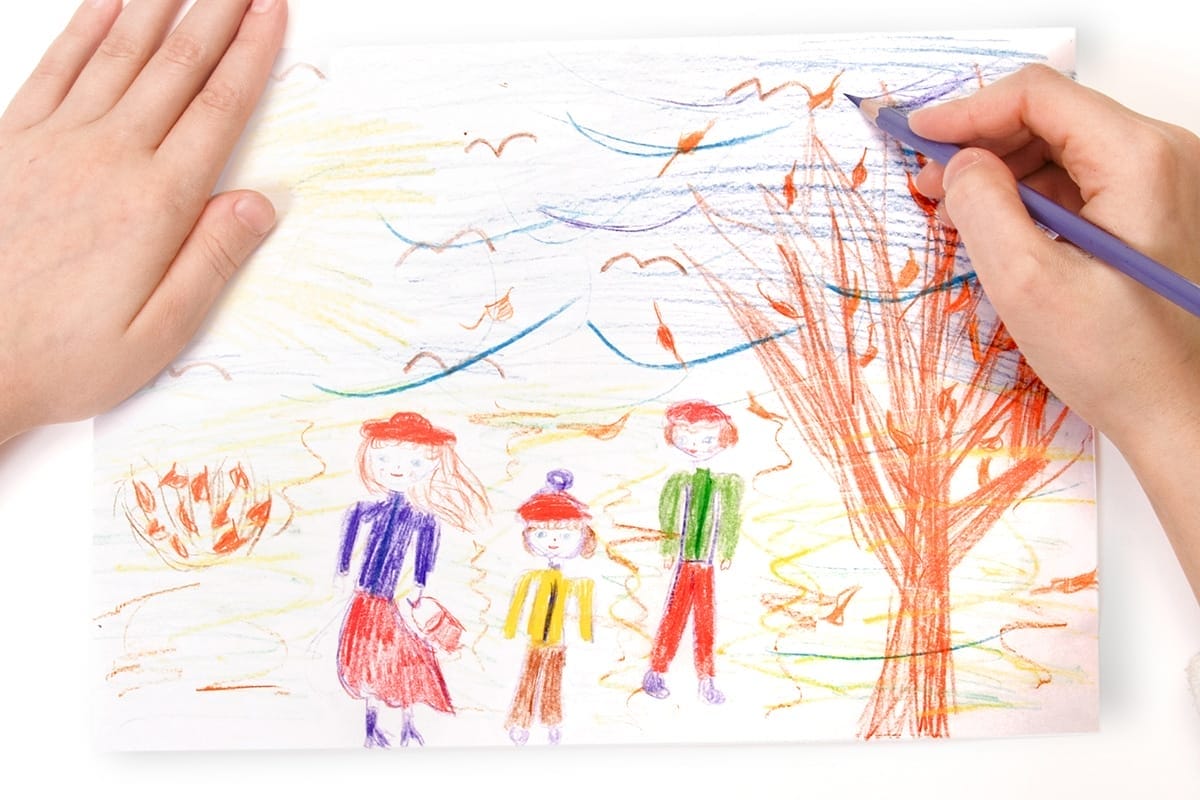
Image: littlebigartists.com
Jonas’ answer is instead that the image is the simplest physical evidence of human-level intelligence. If our intrepid cosmic explorer were to spot pictures on the alien planet, he or she could say with some confidence that here was evidence of human-like intelligence.
Why, though? After all, as mentioned above, even small children can draw faces, houses, and other simple pictures. So is it really that special?
Jonas’ answer is that yes, it is special, because image-making can only come from a creature who can grasp symbols – indeed, from a creature who lives in a symbolic realm in addition to the physical one.
An image exists, he says, on a curious level of reality. To see why, consider this. An image is of something, clearly, but this ‘of’ only pertains to formal resemblance (a resemblance which can in some cases be quite rough). A portrait of a mediaeval monarch, for example, is in only two dimensions, doesn’t move, and has a totally different surface texture to the real person it depicts. And yet it is of that person, simply by virtue of ‘following’ the outlines of their features – outlines that have been abstracted from the real thing.
The fact that we can see the two-dimensional image as of a person indicates that we perceive similarity and difference at the same time: the painting is that person, and yet it is not that person. Even more than this, it demonstrates that we can mentally move ‘above’ both the physicality of the portrait – paint and canvas – and the physical person, and into the realm of symbolic significance that connects them – all this, at the same time as we behold the physical image!
This is, when you think about it, quite remarkable. Even more remarkable still is that a three-year-old achieves it when they draw a circle, add some dots for eyes and a line for a mouth, and say “look, it’s you, Daddy!”.
No animal can do this, just as no animal truly uses language. Of course, animals express themselves through sounds and gestures, and with these they communicate their inner lives. But no animal species has a system of conventional symbols that stand in for physical and mental phenomena, and which can be combined using rules of grammar. And they lack this for the very same reason they lack the ability to create images: that they do not exist on a symbolic level, at the same time as the physical.
For this reason, Jonas says – borrowing a phrase from Ernst Cassier – that human beings are not the animal rationale, but rather the animal symbolicum: the symbol-using animal.
The artificial in AI
I said above that if our cosmic explorers happened upon pictures in their travels, they could declare with some confidence that they’d found evidence of highly intelligent life.
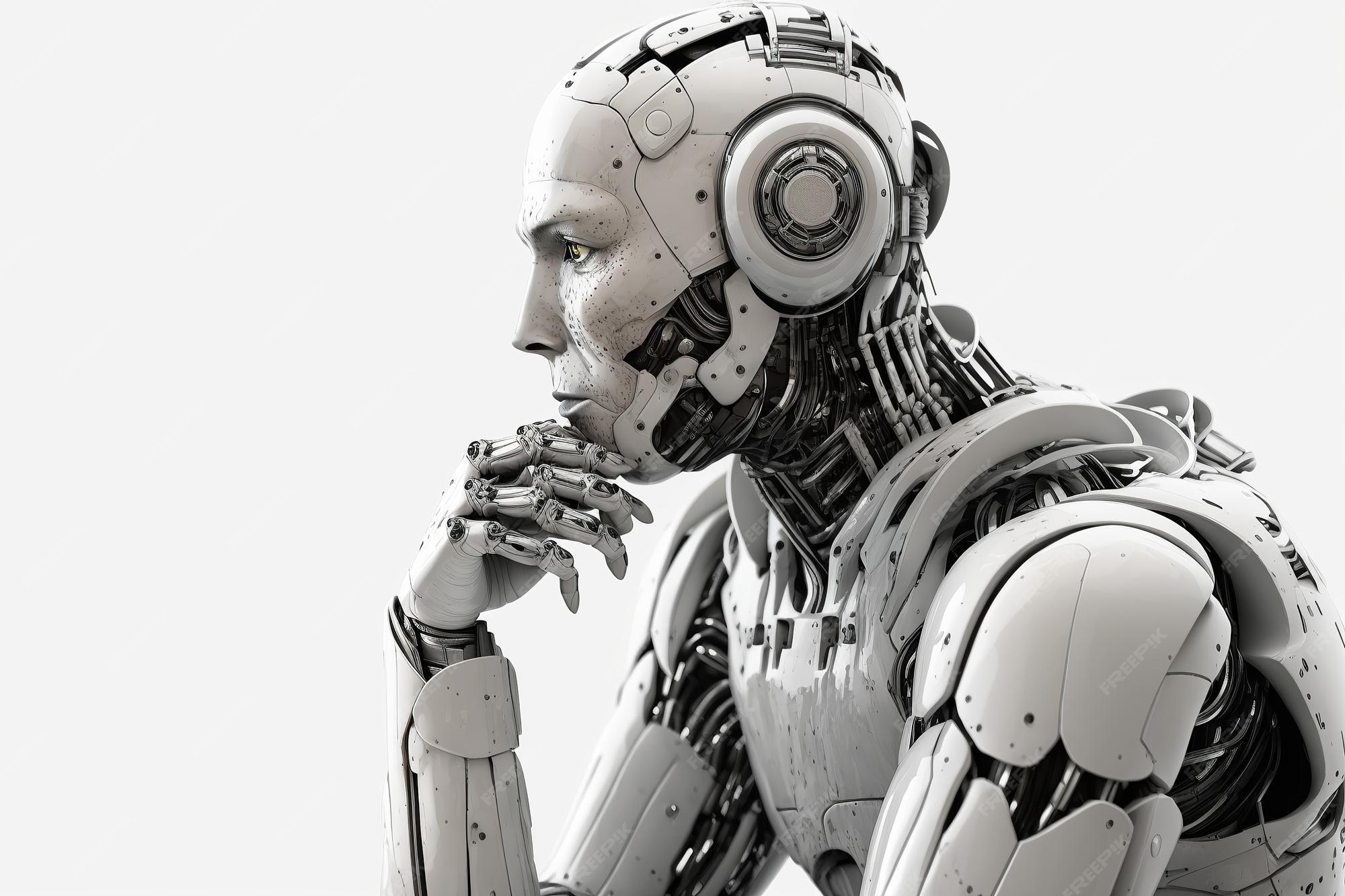
I say ‘some’, because of course, nowadays, such pictures could have been created by generative artificial intelligence. All it takes is a Midjourney account and a few prompts, and within seconds an image is created.
So does this mean that Jonas is wrong, and that AI shares the human capacity for image-making?
As it happens, I think the answer to this is no. AI generates images, certainly, but only because we, as image-making beings, have built it to do so. It’s just the same as how we don’t think that an autopen can really write, despite it putting words on paper in ink. We have simply made it to fulfill the mechanics of the task, without any awareness of what it’s doing. And as long as AI remains artificial intelligence – that is, a simulacra of intelligence, lacking consciousness and understanding – then it will never truly be a symbolic being.
By contrast, when we look at a child’s drawing or at prehistoric paintings of animals, we are looking at true, unmediated usage of symbols. The latter consitutes the earliest physical evidence of the human capacity to exist in a world of symbols, and when we gaze at such paintings – some over 45,000 years old – we are, in an instant, connected to those distant ancestors through the use of symbols.
If a cosmic explorer found something like this, they would have all the evidence they were looking for.
All 50 States: A Passport to Your Mind: A new program for paid subscribers.
Each week, you’ll get a guided exploration of a single state of mind — from everyday states like focus, flow, and daydreaming, to deeper emotional, meditative, and contemplative states we all pass through in the course of a human life.
Think of it like a map + travel guide:
1. Clusters / Regions (like US regions):
Everyday States = “The Lowlands” (common terrain of life).
Emotional States = “The Heartlands.”
Meditative States = “The Mountains” (higher elevations of awareness).
Altered / Substance-Induced States = “The Islands.”
Mystical / Transpersonal States = “The Skies.”
Extreme / Edge States = “The Deserts & Depths.”
(If you’re already a paid subscriber and would like to receive the All 50 States email, click here).

I agree with the intuition about human uniqueness, but there’s a category slip here: images are evidence of symbolic agents, not symbolic agents themselves. Pragmatically, meaning arises from lived experience, intention, and felt significance — what Peirce called Firstness — which machines don’t possess. Terrence Deacon’s neuro-anthropological work makes this especially clear by showing how symbolic reference emerges from biological life and absence, not from computation alone. By that measure, the symbolic act remains human.
Dan Brown would likely find your article as fascinating as I did. Writing is the use of symbols. AI writes but does not always make sense. AI makes images that seem indistinguishable from those made by human beings, so the existence of images could indicate AI but, ultimately, AI is created by human beings (unfortunately). AI is the "Pandora's Box" of human inventiveness. It's awful that we cannot stuff AI back where it belongs--nowhere! It's probably the worst thing invented since the atom bomb.