




Image: canyonranch.com
I showed my “God Wrestling” class—which traces how philosophers have wrestled with the idea of God—a moment from just before a 2017 Green Day concert at London’s Hyde Park. Tens of thousands of people were singing Queen’s “Bohemian Rhapsody” in perfect unison. No conductor. No script. Just a crowd becoming one voice. I asked my students: What is happening to them in that moment? We then discussed it.
Here is the clip:
After sitting with the moment, I posed a simple question: What is religion? As we talked, with me guiding the conversation, this answer began to take shape:
Spirituality vs. Religion
Spirituality is about what we feel. Religion is about what we owe. Religions do not primarily explain the “what,” but the “how”—how to live. Many assume religions exist to answer questions, but just as often they teach us how to live with questions that have no answers. The real divide is not between belief and doubt, but between experience and obligation. That divide raises a pointed question: Is every spiritual experience a religious one, or has spirituality become a way of avoiding religion altogether?
A spiritual experience is immediate. It is a feeling of awe, transcendence, presence, or dislocation. It may come in nature, in music, in love, or in solitude. It does not require doctrine, community, or discipline. It asks less to be interpreted than simply to be felt. Spirituality, in this sense, is episodic—sometimes inward, sometimes outward. It happens to us, and just as quickly, it passes.
A religious experience, by contrast, does not end with the feeling. It binds the experience to a structure of meaning, practice, and demand. Religion takes the raw material of experience and asks what follows from it: What must I do now? How must I live? What obligations emerge from this encounter? Religion is not just the moment of transcendence, but the discipline that grows out of it—and, more importantly, the discipline that remains when the transcendence is nowhere to be found.
This is where the modern celebration of “spirituality” begins to look less like an alternative and more like an evasion. It offers intensity without accountability. It allows for moments of depth without requiring continuity, community, or cost. One can feel profoundly moved and yet remain fundamentally unchanged. We see this everywhere. One can stand at a Taylor Swift concert, sing along, feel seen—even transformed—and wake up the next morning unchanged. One can watch Black Mirror, an anthology series that explores how modern technology distorts and reshapes our lives, feel unsettled by its warnings, and then return to the same habits unchanged. In that sense, spirituality can become a way of consuming meaning rather than being claimed by it.
Philosophical Roots
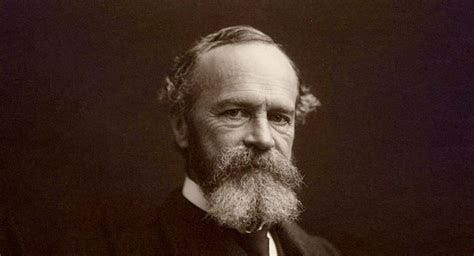
Image: William James, psychologs.com
The philosophical roots of this tension come into focus in the work of David Hume. In Dialogues Concerning Natural Religion, Hume does not so much refute belief in God as dissolve our confidence in ever knowing anything definite about God at all. His skeptical empiricism insists that human knowledge is limited to experience, and since God is not an object of experience, any claim about divine nature becomes speculation dressed up as certainty. The result is not atheism so much as restraint. We are left with impressions and intuitions that may feel spiritual, but cannot be secured as knowledge. Hume, in effect, protects experience while quietly dismantling religion’s ability to explain it.
Later, William James offers a different way forward. In The Varieties of Religious Experience, he refuses to dismiss experience simply because it cannot be proven. Instead, he asks what it does. For James, religious experience is not validated by metaphysical certainty but by its fruits: Does it transform a life? Does it deepen one’s sense of responsibility, humility, or purpose? Experience alone is not enough. What matters is not simply what one feels, but what it binds one to afterward.
This destabilized the project of grounding religion in reason. Immanuel Kant saw this clearly and responded by shifting the center of gravity. If we cannot know God, religion must be rooted elsewhere. For Kant, it is rooted in moral experience. We encounter something binding, universal, and nonnegotiable in the ethical demand itself. His Categorical Imperative—that every person must be treated as an end and never merely as a means—does not depend on feeling. It stands whether we feel anything or not. It obligates.
Here the distinction becomes unavoidable. Experience may move us, but it does not necessarily bind us. One can stand before something vast, feel overwhelmed, and walk away unchanged. Kant’s framework refuses that possibility. Religion, in his account, is not about what we feel, but about what we owe—to one another and to a moral order that exceeds us.
But something is lost in that move. If Hume dissolves religion into uncertainty, Kant risks draining it of immediacy. Religion becomes duty without encounter, structure without fire. It is precisely this loss that Søren Kierkegaard confronts in Fear and Trembling. He turns to the story of Abraham and Isaac, not to explain it, but to expose its impossibility. Abraham is called to sacrifice his son—an act that violates every ethical norm Kant would defend. And yet Abraham proceeds in faith. Kierkegaard calls this the “teleological suspension of the ethical,” a moment in which the individual’s relation to the absolute stands above the universal moral law.
James asks whether an experience transforms a life. Kierkegaard asks what happens when one is bound even when no transformation can justify it.
This is not spirituality as feeling. It is not a moment of awe or unity. It is a demand that isolates, unsettles, and binds. Abraham cannot explain himself. He cannot justify his action to others. He cannot even fully understand it himself. And yet he is responsible to it. Religious experience, here, is not the heightening of feeling, but the deepening of obligation—even when that obligation defies comprehension.
The difference remains. Spiritual experience is intensity without obligation. Religious experience is obligation that survives even when the intensity fades—even when the obligation itself makes no sense. Spirituality asks what we feel in a moment. Religion asks what we do with that feeling over time, and more importantly, what we do when the feeling is gone.
That is the harder claim religion makes: not that we have felt something real, but that we are now responsible to it.
Back to Green Day
Which brings us back to that crowd in Hyde Park. Tens of thousands of people, just before a Green Day concert, singing “Bohemian Rhapsody” in unison. It is, unmistakably, a spiritual moment. There is awe, unity, transcendence, even a kind of surrender of the self into something larger. For a few minutes, strangers become a community.
But nothing is asked of the crowd when the song ends. No obligation follows. No discipline binds. No demand carries forward into the next day. That is the difference.
The crowd sings together and owes nothing. Abraham walks alone and owes everything—even when nothing can justify what he is asked to do.
My students do not ask what the crowd felt. That part is obvious. They ask what it bound them to afterward.
That is where religion begins.


Ayreh has me beat by about 15 years:>))
My first recognition (not just "experience" in the sense in this article) of G-d occurred when I was 17, after reading the sentence, "Religious founders never intended to promote merely a set of beliefs, rituals and dogmas, but rather, a direct experience of God."
I looked up - it wasn't a "feeling" and saw (as clearly as you see the screen in front of you and feel your body) the walls were God, the floor, furniture was God, the birds, trees, houses and cars outside were God (this wasn't a pantheistic philosophy; though I woke up that morning in May, 1970 an atheist/agnostic who had thought that "God" was the old guy in the sky with the long beard who didn't treat humans so well - I only later learned the distinctions of theism, pantheism, panentheism, non dualism, etc)
I turned to rabbis, ministers, priests, none of whom could give me any guidance. I turned to academics in the study of religion and philosophy, who were even less helpful.
I recognized what I had "seen" in the writings of Jewish, Sufi and Christian mystics, but the first "home" I found was in the non-religious, universalist spiritual teachings of Ramana Maharshi (though often put in the context of Hinduism, he insisted one did not have to belong to any religion to practice what he taught, which in "translation" was recognizing one's True Nature and following the teaching, "Not my will but Thine be done" - which is hardly a simple matter of feeling!)
The next year I found Sri Ramakrishna, who famously taught that Jesus, Mohammed and Krishna were all ultimately presenting varied paths to the one Divine Reality, and again, as one can see throughout the writings of the monks and nuns of the Ramakrishna order, taught that one may follow a religion if one wishes, but one can lead an integral spiritual life outside the folds of any particular tradition.
Then I found my home in the teachings of the Egyptian/Turkish Jewish woman, Mirra Alfassa, and the Indian leader of the Independence movement, Aurobindo Ghose. That was in 1975, and my wife and I have remained happily there for the past 50+ years. Sri Aurobindo famously wrote, "the Age of religions is over.'
I've noticed in the past 10 years or so an upsurge in academic writing regarding the "Spiritual but not religious category." Writings about SBNR are often far more negative than that in this, but the subjectivist interpretation of spirituality remains.
how profoundly different is the understanding of Sri Aurobindo regarding spirituality that he wrote about in the articles between 1914 and 1921.
He clearly identifies religion with that which maintains one in what the modern world knows as the ordinary waking consciousness. Spirituality involves a radical transformation (which in the Buddhist Lankavatara Sutra is spoken about as a turning about in the deepest seat of one's being, which Rabbi Nachman wrote of similarly as a shift in the seat of one's identity from the ordinary surface consciousness to reocognition of one's essence of beings as the Divine Spark of the Soul, a teaching very similar to that of Mirra and Sri Aurobindo.
I was the music director for a Spanish Catholic Church through the 1980s. There was one mystically oriented priest there, Father Alphege, who taught me much about the Christian contmplative practices, but for the life of me, I just could never understand what it was that led people to become religious guides when there was no interest in genuine spirituality.
If anyone can help me understand this, I would appreciate it. I can see for centuries how perhaps humanity was not ready for these direct teachings. But we are in the midst of a paradigm shift in science infinitely greater than the one that occurred with Galileo/Bacon/Newton. Scientists have finally joined with the great contemplatives to see Consciousness (Sat Chit Ananda, really) as not just the foundation but the very substance of the universe.
Religion as it is taught and presented in most of the world today still seems stuck in a newtonian world view, almost as if the behaviorist mode of psychology still predominated.
Iv'e been exploring this on the Substack of a scholar of religious ethics, Liz Bucar, who seems to share the view of the authors, though she is struggling. She herself admits never having been religious, and also correctly sees spirituality as something beyond mere subjective experience but she seems terribly confused about the metaphysical foundations of spirituality which would take it far far beyond the idea of personal, subjective experience.
I wish someone would write about this and help clarify the issue!
I have studied and meditated on these thoughts for 70 years. And I congratulate you on your concise and profound exposition. I once taught mysticism and spirituality, and about 50 years ago began a transformation to be an observant Orthodox Jew. Your essay was enlightening as to the nature of that transformation. Thank you.