


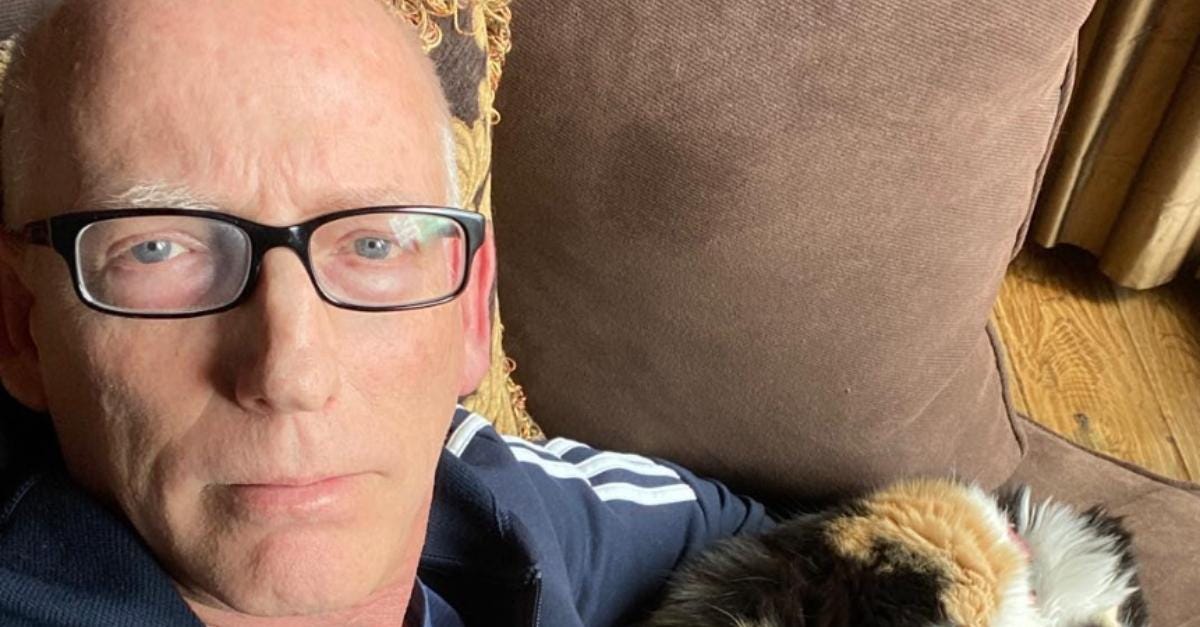
Image: Scott Adams, distractify.com
The heart has its reasons which reason does not know.
—Blaise Pascal
Pascal’s Fire and the Limits of Reason
Blaise Pascal was one of those rare figures who was simultaneously a world-class mathematician, physicist, philosopher, theologian, and literary stylist. He was a child prodigy whose early work in mathematics was so advanced that Descartes reportedly doubted it could have come from a sixteen-year-old. At 19, he invented the Pascaline, a mechanical calculator designed to help his father with tax calculations, and he even challenged Aristotle’s physics through experiments on atmospheric pressure, proving that air has weight and that a vacuum can exist.
On the night of November 23, 1654, between 10:30 PM and 12:30 AM, Pascal experienced an overwhelming encounter he later described in a short, ecstatic text now called the “Mémorial.” He wrote:
Fire.
God of Abraham, God of Isaac, God of Jacob,
not of the philosophers and scholars.
Certainty. Certainty. Feeling. Joy. Peace.
Pascal stitched the parchment into the lining of his coat, and after his death, servants found it sewn into every coat he owned—carefully transferred each time. But what he is most remembered for is his famous theological gamble: now known as Pascal’s Wager. In a nutshell, here’s how it works.
The Wager, Belief, and the Question of Sincerity
Step 1: Reason alone cannot settle the question of God’s existence. He believed that the Wager only kicks in after reason has been exhausted.
Step 2: Risk vs. Reward. In his view, there will be an infinite reward (living in bliss for eternity) for believing vs losing only finite things—habits, pleasures, time—if it turns out not to be true. However, if God exists and one does not believe, there is nothing gained by disbelief and potentially everything lost—whether understood as Hell or as permanent detachment from the Infinite Good.
As you can see, belief is doing a lot of lifting here.
This brings us to the recent death of Dilbert cartoonist and political commentator Scott Adams. Diagnosed with prostate cancer that eventually metastasized, Adams shared the news with his audience last May with remarkable poise. As the disease progressed, he made it known that he was unlikely to see February. A few days before his death, he explicitly invoked Pascal’s Wager in announcing his intention to become a Christian. Here’s what he said:
You’re going to hear for the first time today that it is my plan to convert. I’ve not been a believer. I am now convinced that the risk-reward is completely smart. If it turns out that there’s nothing there, I’ve lost nothing… If it turns out there is something there, and the Christian model is the closest to it, I win.
Belief At the Edge of Death
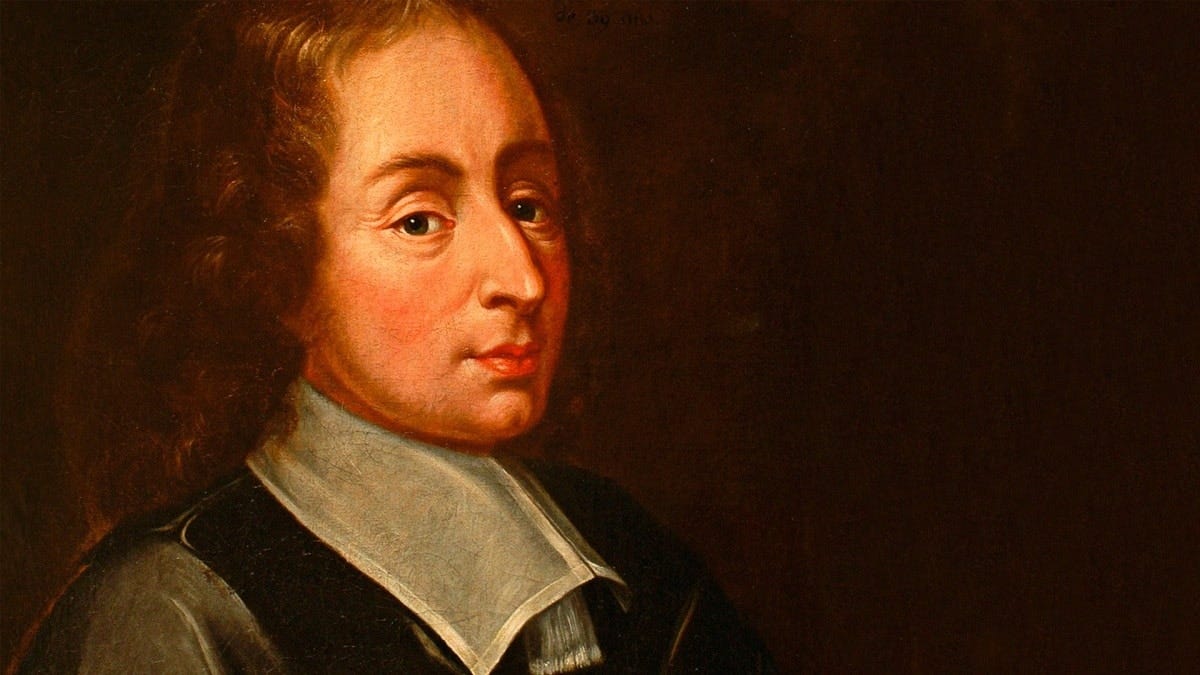
Image: Blaise Pascal, meteorologiaenred.com
Now far be it for me to question the thought-processes of a dying man (especially one who approached it with so much bravery, dignity, and even humor) but something about the framing struck me as philosophically incomplete rather than insincere. It raises all kinds of questions: how do we gauge one’s level of sincerity with this? How much is required? What does “belief” even mean?
Does belief itself have the capacity to create an eternal bond with the Eternal, and if so, why? What about children who die before developing any kind of belief? What of people from cultures who may not have a God concept or a very different one? Wouldn’t it seem somewhat unfair of God to penalize people for those obstacles?
Pascal was drawn to Jansenism, a movement that emphasized human limitation, grace, and inner sincerity over external religiosity. Sincerity seems to be key to all of this—but sincerity toward what? The convictions of a particular tradition, or the more basic sincerity of wanting to be good and to do good?
One of the most interesting facets reported in near-death experiences—including those described by atheists—is the recurrence of luminous (God-like) or transcendent imagery. If the phenomenon is a true one, it would seem to suggest that no prior belief is required. As such, maybe it’s more useful to believe while you are alive, not for what happens after you’re not, but rather as a significant benefit in the here and now. As numerous studies have shown, it is both physically and mentally healthy to be spiritual.
The basic impulse of Pascal’s Wager and Scott Adams’ decision to take the bet are certainly understandable and, from a narrow perspective, logical, but maybe the structure of the bet ends up limiting God rather than advocating for Him. Perhaps Pascal’s Wager works best not as a strategy for the afterlife, but as an argument for orienting one’s life toward meaning, humility, and care while we are still here.
Like a parent who has wayward or uninformed children, in any emotionally healthy scenario, the parent will, with open arms, receive the child at whatever stage they are ready and able to connect.
All 50 States: A Passport to Your Mind: A new program for paid subscribers.
Each week, you’ll get a guided exploration of a single state of mind — from everyday states like focus, flow, and daydreaming, to deeper emotional, meditative, and contemplative states we all pass through in the course of a human life.
Think of it like a map + travel guide:
1. Clusters / Regions (like US regions):
Everyday States = “The Lowlands” (common terrain of life).
Emotional States = “The Heartlands.”
Meditative States = “The Mountains” (higher elevations of awareness).
Altered / Substance-Induced States = “The Islands.”
Mystical / Transpersonal States = “The Skies.”
Extreme / Edge States = “The Deserts & Depths.”
(If you’re already a paid subscriber and would like to receive the All 50 States email, click here).
The notion that God is out there waiting and listening to your every thought to see if you "believe" that he exists is absurd on it's face.
But I guess that if God is keeping some scorebook on hundreds of billions of potential "believers" that's his business. Everyone should have a hobby :)