


I attended a music conservatory in the mid-90s. It was a beautiful place and a formative experience for me. At the same time, the school was stuffed to the gills with exceptionally talented musicians who all wanted to be “the best.” Surrounded by so much brilliance, a certain quiet loathing of other people’s music sometimes took hold. Beneath it all was a shared insecurity about our own capabilities—raw talent, originality, knowledge of theory, and the like. As a result, we often found ourselves vocally disparaging or secretly recoiling from the (often amazing) playing of those around us.
If you had asked me at the time what my biggest fear was, I would have said mediocrity.
Paraphrasing Salieri, the scheming rival to Mozart from the film Amadeus, who was doomed to possess the ear to recognize Mozart’s greatness yet lack the commensurate talent:
Mediocrities everywhere… I absolve you… I absolve you… I absolve you…
Most people carry a deep-seated desire to be exceptional. We want recognition. We want to stand out, to be noticed, and above all to feel that our unique contribution to the world matters. Many of us grow up with the sense that we might be destined for greatness—that with the right choices and enough effort we could become famous, heroic, or brilliant.
Our culture feeds this hunger. We are dazzled by stories of knights and kings, or transcendent beings with superhuman skills. We idolize actors and sports legends who seem to be living lives of glamour, importance, and—so we imagine—deep meaning. Who doesn’t want his name in lights, to debut on ten thousand screens, to hit the walk-off homer in the bottom of the ninth, or to win the Nobel Prize? How thrilling it would be to become a world-historical figure.
This longing is not a mistake. It touches something essential in what it means to be human. In truth, we do have the potential for greatness—though perhaps not the kind we usually imagine. The desire to be exceptional, which drives so many of our choices and emotional states, is the first stage of a classic human journey. It pushes us outward in search of meaning.
But the mature conclusion of that quest is rarely triumph. More often, it ends in something quieter: the recognition of our limits.
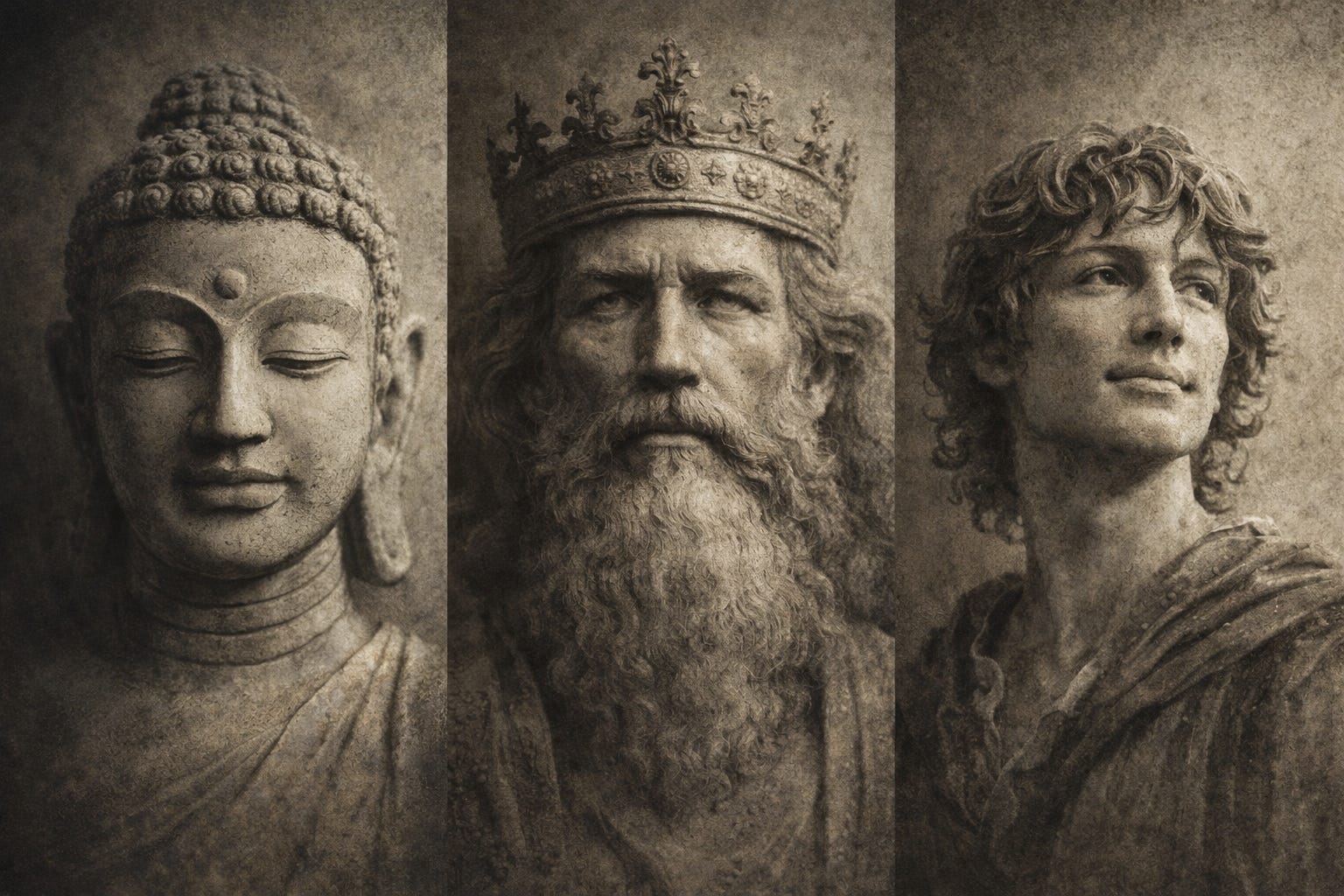
Three famous life stories illustrate this journey with unusual clarity: Siddhartha the Buddha, King Solomon speaking through the voice of Kohelet, and the unlikely hero of the Broadway musical Pippin. Each begins with the conviction that life must hold some extraordinary destiny. Each sets out to find it. And each, in the end, arrives at a surprisingly humble conclusion.
Siddhartha
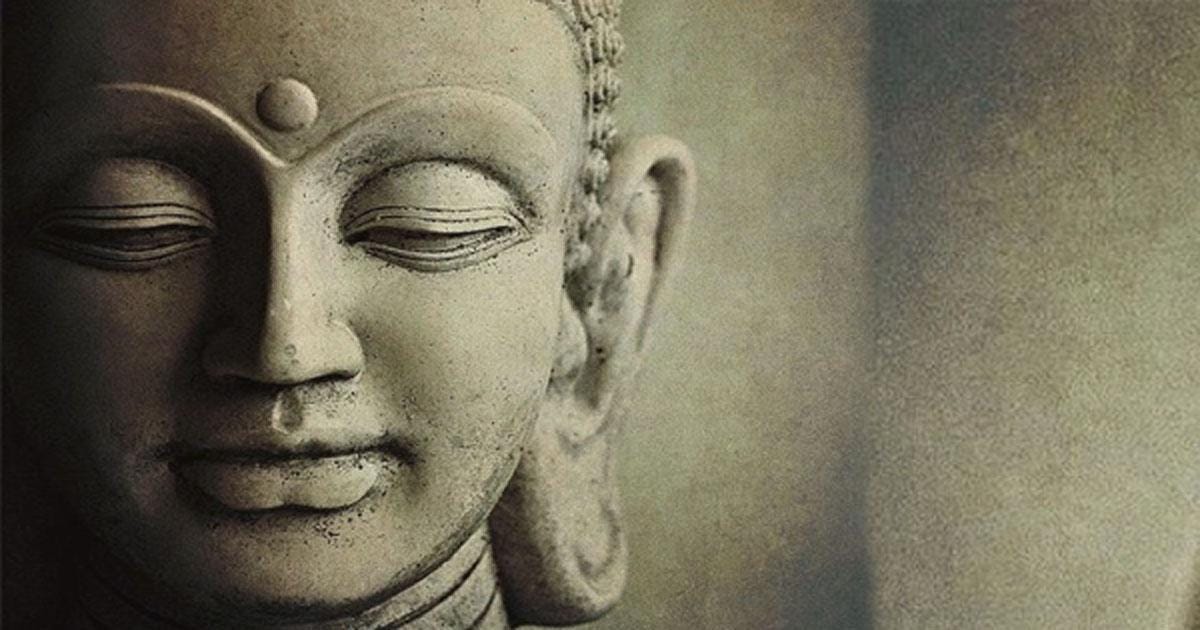
Image: ancient-origins.net
Siddhartha Gautama (who later became known as the Buddha) was born in Lumbini, in what is now southern Nepal, around the 5th century BCE. Like Moses and St. Francis of Assisi, Siddhartha abandoned an inherited life of luxury and chose instead to seek the world of the spirit. Born a prince and destined for greatness, he lived a sheltered life carefully designed to keep him away from troubling existential questions. Yet even within the palace walls he felt a stirring in his soul—the pull of something beyond ordinary human experience.
Leaving the palace, his family, and his comforts behind, Siddhartha set out to transcend the human condition entirely. He sought enlightenment through radical asceticism, pushing deprivation to its limits. Eventually he realized that this path too had its limits. Neither luxury nor self-mortification could deliver the freedom he sought. From this realization he articulated what would become known as the Middle Way.
Only when he accepted the boundaries of human experience did something deeper become possible. What he discovered he called enlightenment. Yet enlightenment did not make him superhuman. Rather, it revealed the ordinary nature of suffering, awareness, and the fragile conditions of life itself. True awakening, in this sense, is not the achievement of radical exceptionalism. It is the ability to see reality clearly and to accept the human condition for what it is.
The journey of Siddhartha reveals a paradox: the search for ultimate transcendence ends not in superhuman glory but in a deeper acceptance of the ordinary. A remarkably similar pattern appears in the story of another figure who seemed destined for unparalleled greatness—King Solomon.
Solomon
Five hundred years earlier and three thousand miles to the west, the reign of King Solomon unfolded. Renowned for his wisdom and traditionally associated with the biblical trilogy—Song of Songs, Proverbs, and the haunting reflections of Ecclesiastes (Kohelet)—Solomon set out on a remarkable intellectual and existential experiment. As he puts it, he applied his heart “to seek and to search out by wisdom all that is done under heaven.”
Across twelve intense chapters, Kohelet records a systematic exploration of every path life seems to offer. Solomon tests pleasure, wisdom, wealth, achievement, and the acquisition of power—each pursued with unmatched resources and intelligence—in the hope of discovering lasting satisfaction and peace of mind.
The results are not encouraging.
Despite his exceptional status as the builder of the Temple and a king renowned throughout the ancient world for his wealth and wisdom, each pathway ultimately collapses into what he famously calls “futility of futilities.” The book is sometimes read as nihilistic, but this misses its deeper point. Kohelet is not denying meaning; he is confronting the stubborn limits of human striving.
Even wisdom itself cannot deliver ultimate fulfillment. As Solomon observes with painful honesty, “with much wisdom comes much grief.”
After exhausting every possible avenue, Kohelet arrives at a strikingly simple conclusion. The penultimate verse records the final insight of his long journey: that the ultimate wisdom lies not in boundless achievement but in humble alignment with the divine.
When everything has been considered:
Fear God and keep His commandments,
for this is the whole of man.
Pippin

Image: broadway.com
This same pattern appears in a very different setting—not in the courts of ancient kings or the forests of wandering ascetics, but on the brightly lit stage of a Broadway musical.
Pippin is my favorite Broadway show. Beyond the fantastic music and clever lyrics by Broadway legend Stephen Schwartz, the story itself is surprisingly profound. True to the pattern we’ve seen, Pippin is the son of a king and believes himself destined for greatness:
When you’re extraordinary, you gotta do extraordinary things.
He dabbles in the glory of warfare, in hedonism and unrestrained sexuality, politics, art, and religion. Each path promises greatness and meaning but none delivers. Toward the end of his journey he finds himself living a simple farm life with an ordinary country woman and her child. He complains constantly, but he also seems almost happy—almost convinced that this quiet life might be enough. Suddenly, he catches himself. He can’t possibly be satisfied with this pedestrian situation. He is after all, the extraordinary Pippin. He leaves her.
Having failed to find meaning in any of his pursuits, the play’s narrator offers him one final chance at permanent glory: to self-immolate on stage in an audacious blaze of heat and light. He is tempted. Then, at the moment of truth, he turns inward and the folly of his life’s pursuit is laid bare:
They showed me crimson, gold, and lavender
A shining parade
But there’s no color I can have on earth
That won’t finally fade
When I wanted worlds to paint
And costumes to wear
I think it was here
‘Cause it never was there
Stripped of the illusions and dreams of magnificence, he lets it all go and chooses a life of humble simplicity. And at last, he is happy.
The journeys of Siddhartha, Solomon, and Pippin all arrive at the same surprising destination. Each sets out to test a different promise of greatness: spiritual transcendence, worldly wisdom and power, heroic fame and spectacle. Yet all three discover the same truth. The search for greatness leads not to triumph but to humility.
The extraordinary life we imagine turns out to be less meaningful than the ordinary life we are given.
Perhaps the point of striving for greatness is not to become exceptional at all. Perhaps the journey exists to teach us something quieter: that a fully lived human life—bounded, imperfect, and finite—is already enough.
A beautiful piece!